
Your Black Friday conversion rate roughly doubles on the day: 3.4 orders per 100 visitors against 1.92 on an ordinary day (Uptain, 2025). The other 96.6 leave. On November 27, 2026 you will have paid peak price for every one of them, discount included.
What a Black Friday conversion rate actually looks like
Uptain runs a plugin inside more than 3,000 online stores and watches what 30 million real shoppers do, in real time. Its Black Friday 2025 analysis is unusually useful because it counts sessions instead of headline revenue, which is what almost every other Black Friday recap does.
A typical store draws 1,999 visitors on an ordinary day. On Black Friday it draws 4,062. Traffic doubles. Conversion follows: 3.4 purchases per 100 visitors against 1.92, up nearly 79%.
Then comes the number that should stop you. Cart abandonment barely moves, from 71.65% on a normal day to 70.91% on Black Friday. One point. The discount buys intent and repairs nothing in the journey, so carts empty for the reasons they empty in June: shipping costs discovered too late, a missing payment method, a choice between two models nobody is there to settle.
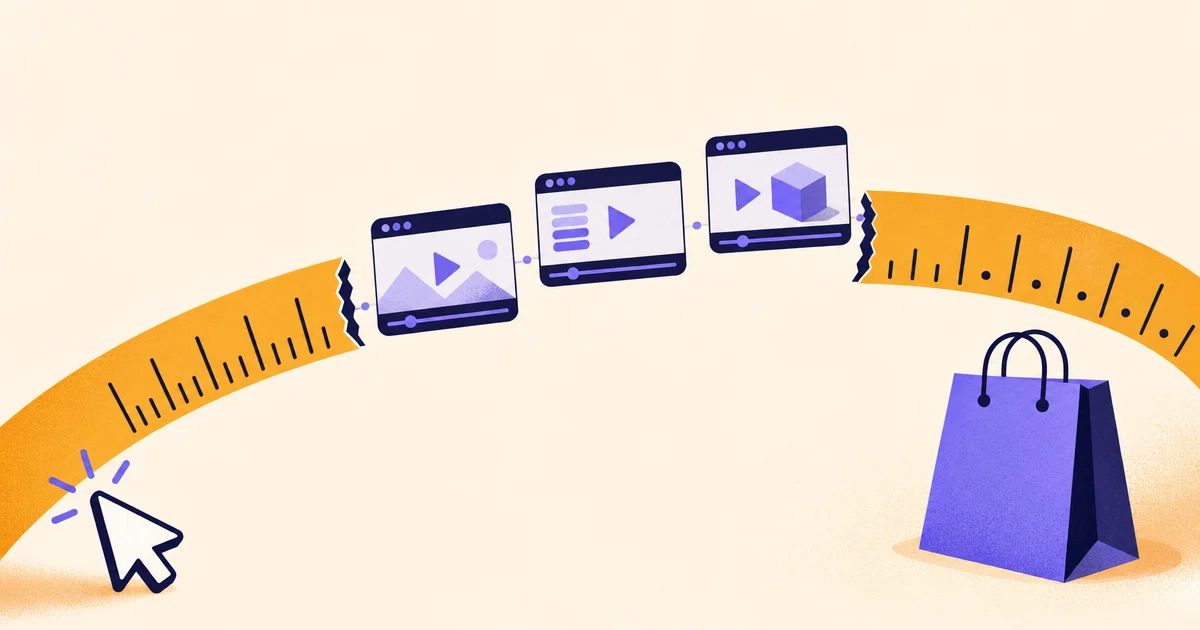
So 96.6 out of every 100 visitors cross your store on the most expensive day of the year and walk straight back out.
Why those extra conversions never turn into profit
Take a $100 product carrying $55 of gross margin. Cut it 25% on November 27 and you keep $30. That same day, the auction that delivered a buyer for $20 in October charges you closer to $40. You just sold at a loss while your dashboard reports the best day of the year.
Gupta Media tracks paid social rates across tens of billions of impressions, and its 2025 report puts hard numbers on that spike. On Black Friday 2024, a thousand impressions on Facebook and Instagram cost $16.85, against a $7.43 annual average for the platform. Cyber Monday, at $17.70, was the single most expensive advertising day of the year.
Two blades, closing on the same margin.
A third one showed up in 2025 and went almost unnoticed. Salesforce measured Cyber Week across more than 1.5 billion shoppers: global sales rose 7% to $336.6 billion, with Black Friday alone worth $79 billion. Order volume, though, grew only 2% globally and 1% in the U.S., while average selling price climbed 6%. The headline growth came from price tags, not from a wave of new buyers.
Accertify, whose figures were published on December 1, 2025 and cover the 52.5 million transactions it processed that day, tells the same story from another angle: transactions up 24% year over year, total value up just 3%, and an average order value down to $115.46, a 17% drop. More orders to pick, pack, ship and refund, for roughly the same revenue.
| Metric | Black Friday 2025 | Source |
|---|---|---|
| Transactions processed on the day | 52.5 million, up 24% YoY | Accertify (2025) |
| Value of those transactions | $6.06 billion, up 3% | Accertify (2025) |
| Average order value | $115.46, down 17% | Accertify (2025) |
| Cyber Week order volume | up 2% globally, 1% in the U.S. | Salesforce (2025) |
| Cyber Week average selling price | up 6% | Salesforce (2025) |
| Meta cost per thousand impressions, Black Friday | $16.85 against a $7.43 annual average (2024) | Gupta Media (2025) |
Read the first row against the second. The market is not collapsing, it is fragmenting: people buy more often, for less, after comparing for longer. One honest caveat on those Accertify numbers, since almost nobody prints it: they cover transactions processed mainly in the U.S. for international merchants, so treat them as a direction of travel rather than a census.
The squeeze itself is not seasonal. Contentsquare analyzed 90 billion sessions across 6,000 sites, comparing the fourth quarters of 2023 and 2024, and found the cost of an online visit up 9% in a year and 19% over two, while conversion rates slipped 6.1%. Sites that leaned harder on paid social converted 10.6% worse. Black Friday simply compresses all of that into twenty-four hours.
The 77% who never come back
Here is the part no Black Friday recap publishes, because it only surfaces a year later.
Of the shoppers who discover a store on Black Friday, Uptain finds that 22.59% place a second order within twelve months. More than three quarters never buy again.
Run that through the math above. You bought a customer at peak price, handed over a quarter of your margin, and she is not coming back. Her lifetime value is that single $115 order, minus the discount, minus the ad spend, minus the pick, pack and box.
Blame the job description, not the day. A product page does precisely what it was built to do: show a price, a photo, a button. Nobody ever asked it to start a relationship, and the automated welcome email three days later does not start one either. Your November 27 visitor met no one. She met a price tag.
Which leaves one question worth asking, and it has nothing to do with the percentage: what does your visitor actually meet between the click and the cart?
What your product page cannot do on November 27
In a store, a salesperson asks two questions and points you at the right model in thirty seconds. You walk out with the thing that fits, and usually with the accessory too. Online, the same page loads for someone meeting your brand for the first time and for someone who has been comparing you with four competitors all week. On November 27 it loads for both at once, and you paid peak price for both.
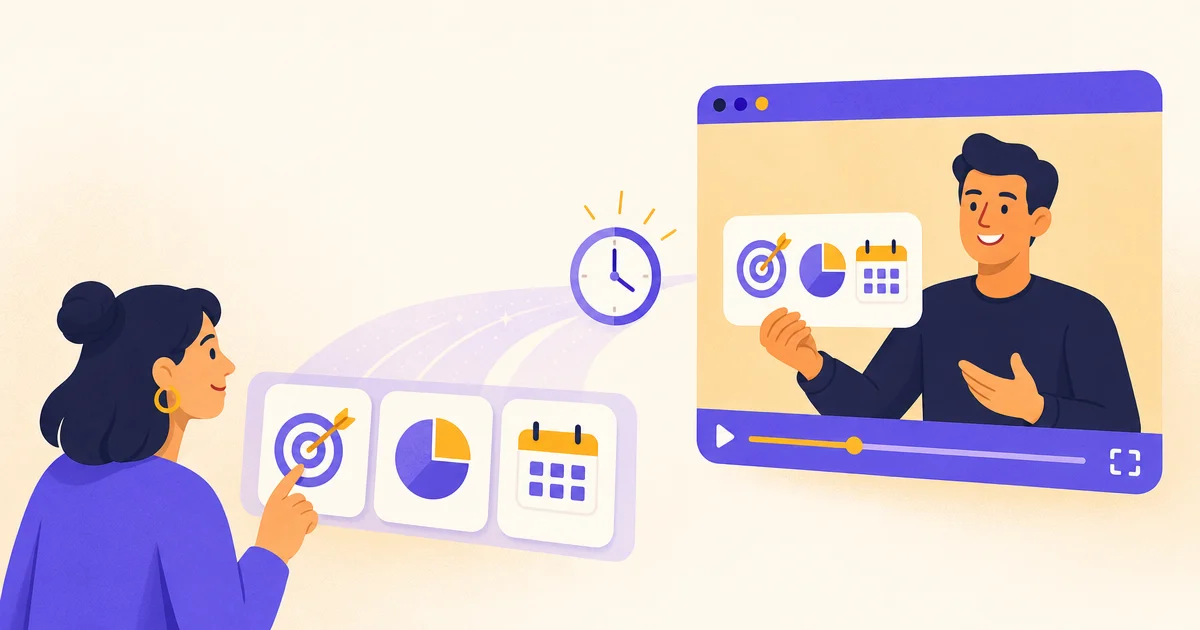
A video funnel closes exactly that gap. The visitor starts with a quiz of five to fifteen questions, each one asked on camera by the seller. Every answer commits her a little further and documents her situation: what she needs, what she can spend, what is holding her back. Shortly after, she gets a ten to fifteen minute analysis video, cut for her from segments a real person actually filmed. Nothing is generated. It is the same face on screen, answering what she just said.
Three forces fire at once. Commitment, because she put time into the quiz. Reciprocity, because someone just spent ten minutes on her. Conviction, because she watched a ten minute sales argument end to end, by choice, which no product page has ever managed.
Go back to the Contentsquare figure. Sites that deepen sessions by 10% pick up 5.4% more conversions. A video funnel is not playing for 10%. It turns a forty second visit into ten to thirteen minutes of deliberate attention, on the one day of the year when your visitor has budget in hand and four tabs open.
VideoFunnel is built to run that mechanism at scale, and its customers show the size of the gap. BodyTime, which sells training programs, asks fourteen questions about goals and delivers a thirteen minute video; the brand reports conversion multiplied by 2.5 on identical traffic, with thirteen minutes of attention captured before the offer even appears. Anna Velazia, in jewelry and crystal healing, asks fourteen questions about emotional state and delivers twelve minutes of video; the video funnel became their number one acquisition channel, carrying 70% of ad budget, with ROAS three times what their other campaigns return. Those are their numbers, not a market average.
Note what neither brand did: switch off the ads. Your November auction price will not drop because you changed method. What changes is what the ad dollar buys. The same click, at the same peak price, lands on a conversation instead of a shop window.
The objection always lands in the same place: you have to film. True. Budget two to four hours of shooting depending on how granular the analysis gets, another thirty minutes of setup, a recent phone and decent light. Half a day, once. Your competitors will spend November testing their forty-seventh promo banner.
What has to be filmed before November
You cannot improvise a video funnel on November 20, for a dull reason: the filming has to already exist.
September is for writing the questions. Five to fifteen of them, no more, the ones your best salesperson would ask before recommending anything. A funnel with five questions and three options each already yields hundreds of combinations from around twenty filmed segments, so the combinatorics do the work, not the number of shoot days.
October is for filming and wiring. Stripe, Klaviyo, Shopify, Mailchimp and ActiveCampaign are native, and webhooks handle the rest. Leads reach your CRM with a full profile attached, which beats an email address harvested behind a promo code.
Put the funnel live in early November and push cold traffic at it for two weeks, while the auction is still reasonable. You will find out which question loses people, which video segment is missing, which follow-up actually closes. November 27 is not a testing day.
That morning, every competitor you have will be offering the same thing: a percentage. A visitor who has just spent twelve minutes listening to you talk about her situation is no longer comparing the same things. That is where the day is won, and the decision gets made in October, camera in hand.
Frequently asked questions
What is a good Black Friday conversion rate?
Around 3.4 purchases per 100 visitors, against 1.92 on an ordinary day, based on Uptain's 2025 study of more than 3,000 stores. Treat that as a floor rather than a target: your traffic mix, price point and category move the number a lot. The useful comparison is your own November 27 against your own average Tuesday.
Will a deeper discount fix a weak conversion rate?
Not on its own. Cart abandonment moved barely one point on Black Friday 2025 despite site-wide markdowns (Uptain, 2025), which means the discount pulls in intent but leaves every point of friction intact. Deeper cuts also hit margin exactly when acquisition costs peak, so the extra orders can cost more than they return.
When should I start preparing for Black Friday?
Traffic work starts six to eight weeks out; the funnel starts earlier. Use September to write your questions, October to film segments and connect integrations, early November to go live and shake the journey out on cold traffic while auction prices are still low. Save the day itself for selling, not testing.
How do I keep the customers I acquire on Black Friday?
Give them something other than a price to remember. Fewer than a quarter of first-time Black Friday buyers order again within the year (Uptain, 2025), because a price tag is all they met. A prospect who answered a quiz and watched twelve minutes of video leaves a usable profile behind, and remembers a brand rather than a promotion.