
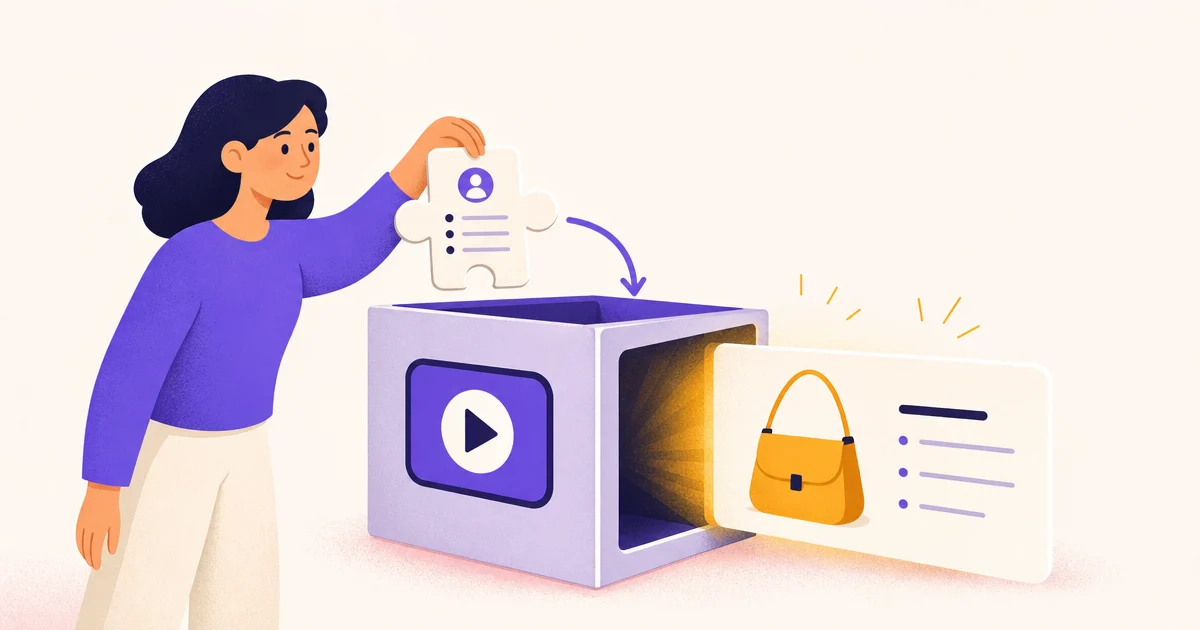
Personalized video pays off most in ecommerce categories where the sale depends on a diagnosis: skincare, haircare, supplements, sleep, sports nutrition, fine jewelry, anything configured to one person. The pattern is not the industry. It is the shape of the sale: the buyer holds the input, and the brand produces the answer.
Why advice-heavy brands pay the most for traffic
Two brands sell online at the same price, on the same ad budget. One sells t-shirts. The other sells a three-month supplement protocol. The first has nothing to ask its visitor, who knows the size and can see the color. The second is selling an answer to a question its visitor could not phrase correctly in the first place.
IRP Commerce measures trading data from the merchants on its platform every month across the UK and Ireland. In July 2026, cost of acquisition ran at 11.93% of revenue in health and wellbeing and 12.29% in baby and child, while food and drink came in at 4.16%.
Three times cheaper. Nobody has to be persuaded to reorder coffee, and persuasion is what impressions get spent on.
France publishes the cleanest read on where that persuasion now happens. In its 2026 key figures, the ecommerce federation Fevad reports that close to one in three online shoppers already use AI while buying, mostly to look up information, compare products and prepare a decision. Among regular AI users the share approaches three in four. The advice has left your site. Someone who does not sell your products is giving it.
Abandonment, meanwhile, has barely moved in twenty years. Baymard Institute averages fifty studies into a 70.22% cart abandonment rate in its September 2025 update, and finds that 42% of US shoppers have abandoned a cart because they were only browsing. Strip the browsers out and much of what remains is not a checkout problem. It is a conviction problem, and no form field ever fixed one of those.
The two-question test
The test is two questions long. Does the right answer depend on information only the buyer holds: their age, their goal, their level, their skin, their sleep, their budget, the room they are furnishing? And once you hand over that answer, can the buyer check on their own that it is right?
Two yeses and what you sell is a calculation. You are asking someone to buy the output of a process they cannot rerun, which means trusting your method as much as your product. A human seller wins that situation every time. A product page loses it more often than any other.
A strength coach is the textbook case. Nothing useful can be proposed before knowing the starting point, the old injuries, the number of sessions that fit into a real week. Once those land, the entire job is producing an answer the client would never have reached alone. The same shape repeats in skincare, haircare, sports nutrition, mattresses, outdoor gear and jewelry bought for what it means.
The second condition carries more weight, and it is where most brands stop early. Plenty of them ask good questions. Almost none defend the answer. McKinsey put numbers on the expectation back in 2021, in its Next in Personalization report: 71% of consumers expect personalized interactions and 76% get frustrated when they do not get them. The bar has kept rising since. Three recommended products on a results page impress nobody now.
Where the gap is widest, category by category
The data exists and almost nobody cites it. RevenueHunt published a benchmark of product recommendation quizzes in June 2026, built on more than 45 million responses across over 20,000 stores. The average is the least interesting number in it. The spread between categories is the story.
| Category | Orders per completed questionnaire | Order value gap within the same store |
|---|---|---|
| Fragrance | 6.9% | Flat |
| Haircare | 6.7% | +14% |
| Supplements and health | 6.2% | +14% |
| Beauty and skincare | 6.1% | +20% |
| Coffee and tea | 5.0% | Flat |
| Other sectors | About 3.6% | +10% |
Source: RevenueHunt, June 2026. These rates divide orders by completed questionnaires rather than by visitors, so the people counted are already more engaged than the average shopper, as the report states plainly. The gap from one row to the next still compares cleanly.
At the top sit purchases where the buyer feels unqualified. They do not know which formula suits their hair, which compound answers their fatigue, which fragrance will hold on their own skin. Further down sit purchases people have been making unaided for years. The right-hand column carries the second lesson: in beauty, orders that came through a questionnaire run 20% larger than the rest inside the same store, while fragrance and coffee run flat. A diagnosis that builds a routine sells a set. A diagnosis that names one item sells one item.
Then there is the high-ticket case, and it is the most useful one. The report notes that heavier, higher-consideration purchases convert far lower on the results page, with the sale drifting off-session and landing later. The bigger the decision, the less a questionnaire alone can close it. Everything below turns on that sentence.
Where a results page runs out
A recommendation quiz stops at the exact moment the work starts. It shows an answer. It does not defend it.
Back to the coach. The personalized program goes out as a PDF, right movements in the right order. The client opens it, sees a list, and still has no idea why the first block is core work instead of cardio. The reasoning, which is the real product, stayed with the seller.
A video funnel puts that reasoning where it earns its keep. The visitor answers a run of questions asked on camera by the seller, then gets a ten to fifteen minute analysis video assembled from those answers. Every segment is genuinely filmed by the brand, then edited together to match the profile. Someone walks the buyer through their own situation, names the problem and argues the recommendation.
Three things fire off along the way. The visitor spent ten minutes before seeing anything, and people stay attached to what they have put in. A video was made that exists for them alone, which creates a small, real debt. Above all, they watched a ten minute pitch end to end, by choice. Ask your product page how long it holds anyone.
Brands running this mechanism report results that track the table above. Anna Velazia, in jewelry and crystal healing, asks fourteen questions about emotional state and returns twelve minutes of video; the brand moved 70% of its ad budget onto that channel, now its first acquisition lever, at three times the ROAS of its other campaigns. BodyTime, in sports programs, reports conversion multiplied by 2.5 on the same traffic, and thirteen minutes of attention captured before the offer even appears. Those numbers belong to those two brands and their funnels. They are not an average.
The three objections
Order value comes up first, every time. IRP put the average order at 122.26 pounds in July 2026, and at that level nobody films anything to sell one item. The math does not run on the order, it runs on the customer. A supplement brand that sets up a three-month protocol, a skincare brand that builds a full routine, or a training program renewed across a year is not selling a single item at that price.
Filming comes next, and it looks heavier than it is. Budget two to four hours of capture depending on how fine the analysis goes, a recent phone, decent light, then about thirty minutes of setup. That barrier is the whole point: a page gets copied in an afternoon, a seller talking to camera does not. Five questions with three options each produce hundreds of combinations out of roughly twenty filmed segments.
The last objection has the most substance, and it lands on the status quo: plenty of brands already run a quiz. It ends on a results page, and only seven in ten people who start ever reach it. What sets that number is the reward promised at question one. A product list does not buy the same effort as ten minutes of analysis addressed to the person answering.
Write the answer before you write the questions
Start from the answer. Take your five most common customer profiles and draft, for each, what a good seller would tell them in ten minutes face to face. That text decides which questions you ask. Funnels that disappoint almost always started from the question list.
Then check that every question feeds the video. A question whose answer changes no segment costs you a drop-off and returns nothing, so it goes. Five to fifteen questions is enough, and the seller on camera asking them is already doing part of the convincing.
The rest is patience. One in five orders attributed to a questionnaire lands more than thirty days later, per that same June 2026 benchmark, so what you set up this quarter keeps reading on the next one. Brands that sell a calculation and keep shipping it as a static page are leaving their best argument in a drawer. It fits inside ten minutes of video nobody else can film for them.
Frequently asked questions
Does a video funnel work with a small catalog?
Yes, often better than with a large one. Ten products where the choice is hard is exactly the problem a video funnel solves: the buyer cannot tell which one is for them. The analysis video argues the recommendation instead of simply posting it. Wide catalogs mostly need filtering.
How is this different from a product recommendation quiz?
A quiz displays a result. A video funnel explains it. The visitor gets ten to fifteen minutes of video assembled from segments the brand actually filmed, matched to their answers. They receive the reasoning and not only the conclusion, and on purchases that carry weight, the reasoning is what decides.
Do I need a high average order value?
Order value is not the deciding factor. What matters is how much advice the purchase needs and what a customer is worth over time. A supplement protocol, a skincare routine or a renewed training program are worth far more than a first order. The gap widens as soon as the buyer needs guidance.
How much filming does it take?
Two to four hours of capture, depending on how fine the analysis goes, plus roughly thirty minutes of setup. A recent phone and decent light are enough, since the human feel matters more than technical polish. Five questions with three options then generate hundreds of combinations from about twenty filmed segments.
Will shoppers really watch a ten-minute video?
They do when the video is about them. Attention holds because the questions came first: the viewer has already invested time, and the video answers what they just described. BodyTime reports thirteen minutes of attention captured before its offer even appears, on video built from its own customers answers.