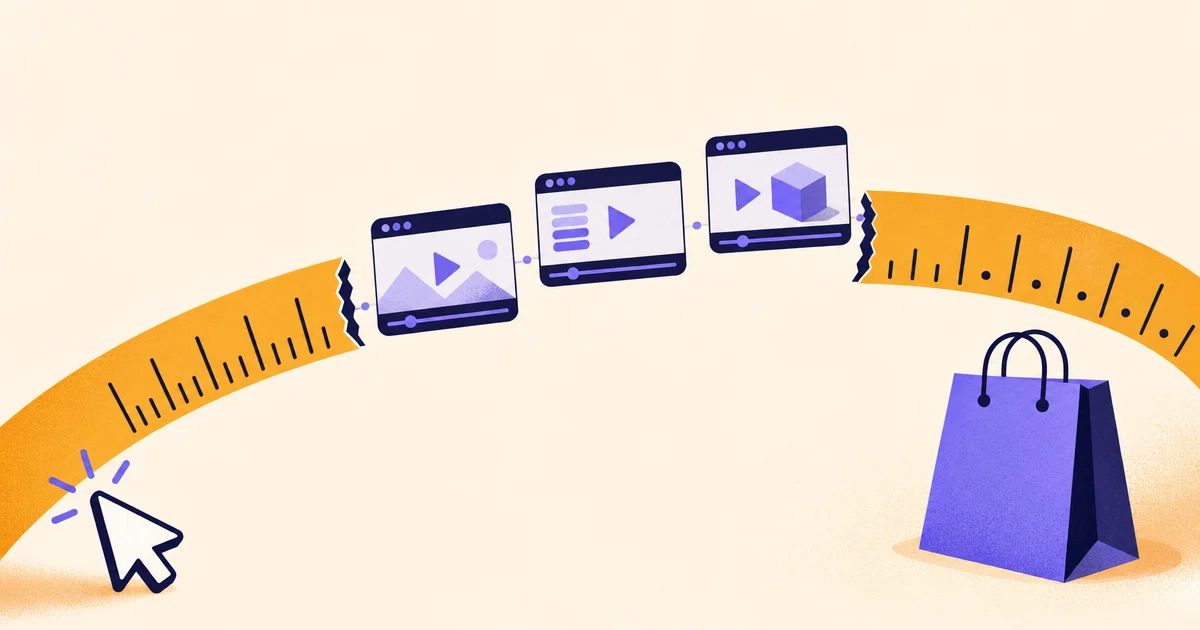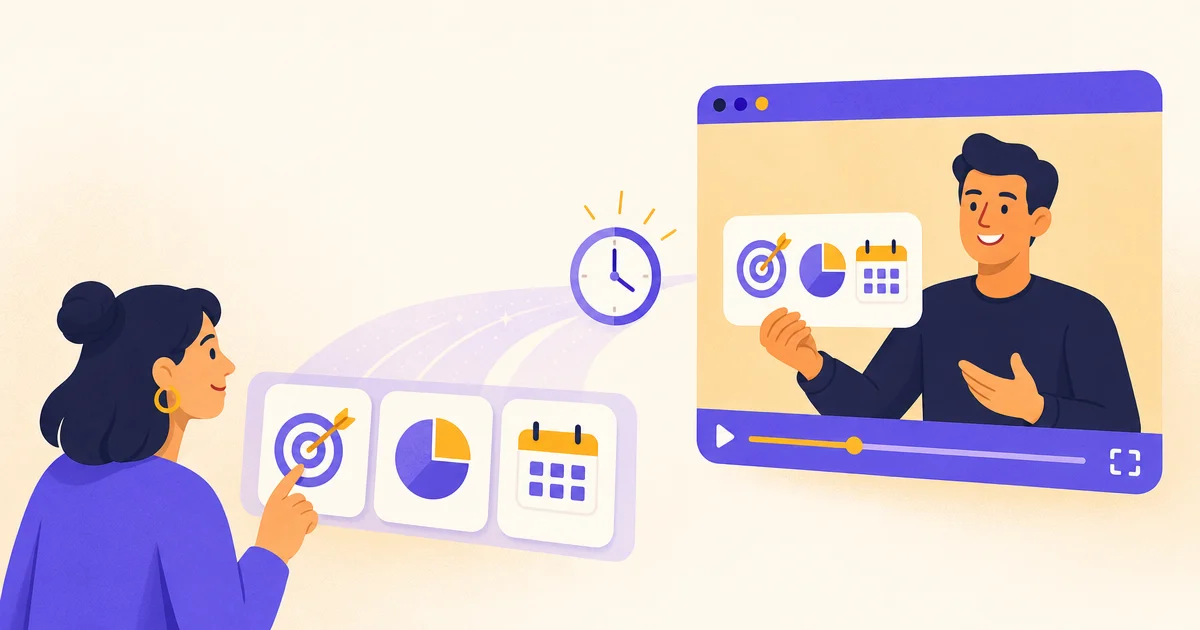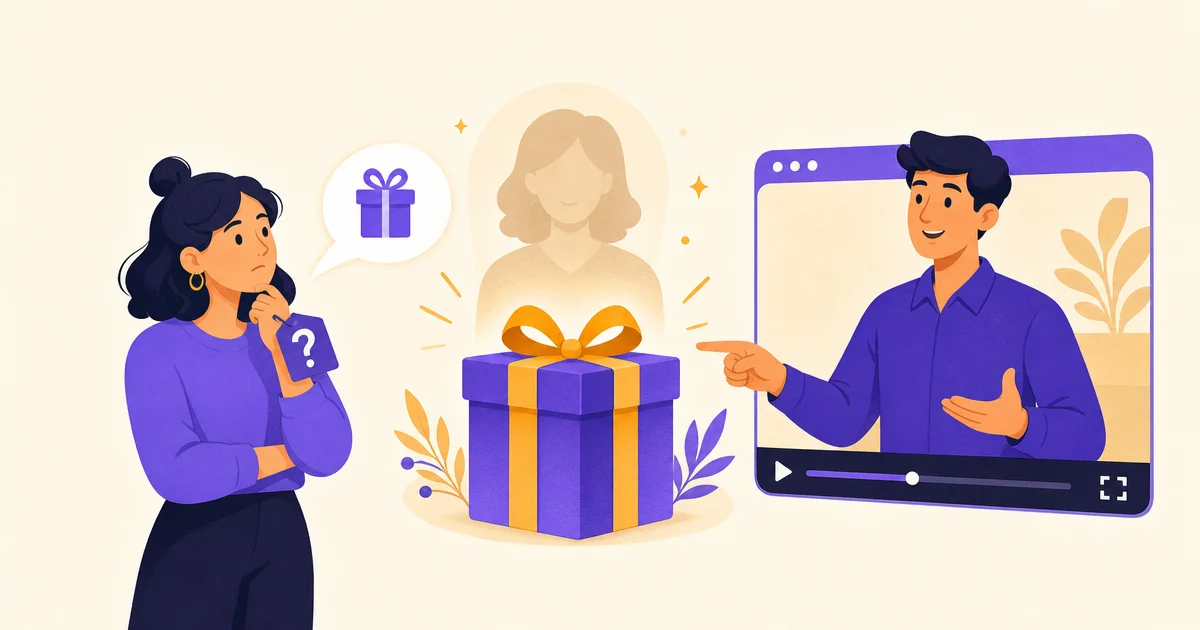
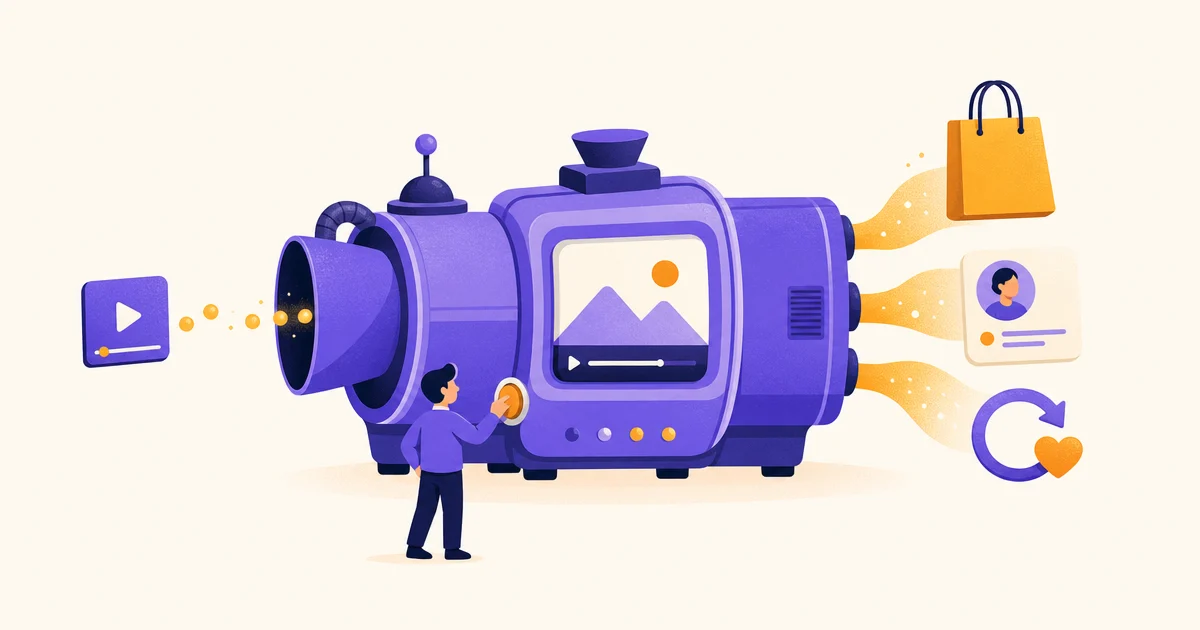
A video funnel replaces the static product page with a conversation: each visitor answers a quiz, then receives a personalized analysis video assembled from segments the brand actually filmed. For an online store, the effect shows up along the whole chain: ads that pay back, engaged visitors, higher conversion, a CRM full of declared data, customers who bought the right product.
Why more traffic won't save your store
Start with the numbers ad buyers stare at every morning. Triple Whale, which aggregates the ad accounts of more than 40,000 ecommerce brands, measured a Meta CPM of $15.06 between August 2025 and July 2026, up 13.24% in a year, while post-click conversion slipped to 1.53%. Average ROAS across those same brands: 1.88. You pay more for each visitor, and each visitor buys less.
Most stores respond where they feel in control: new creatives, new hooks, new audiences. That treats half the problem, and the smaller half. According to Littledata (2026), the average Shopify store converts 1.4% of its visitors while the top 10% clears 4.7%. Both pay the same CPM. The gap lives after the click, on a page one store left silent and the other made talk.
Look at what greets a visitor once the ad has done its job. The same page for everyone, a buy button, and nobody to answer the one question holding them back. Baymard Institute has tracked the outcome for years: 70.22% of carts are abandoned (an average of 50 studies, 2025). In a physical store, a hesitant customer finds a salesperson. Online, they find an FAQ.
What a video funnel actually does
The mechanics take two steps. The visitor first answers a quiz of 5 to 15 questions, each one asked on camera by the seller, the way it would happen in a store. The software then scores those answers and assembles segments the brand really filmed into a personalized analysis video of 10 to 15 minutes, addressed to that one person, their need, their level, their objection. It lands about two hours later, followed by automated follow-ups. The full mechanics are covered in our guide to what a video funnel is.
Three psychological levers now work for the store. Commitment: the visitor invested minutes in the quiz and wants their answer. Reciprocity: the brand just spent a whole video on them, personally. Conviction: they watched, by their own choice, ten minutes of argument built around their own situation. No product page produces that state in a stranger.
One detail matters more than it looks: there is no avatar and no generated footage here. These are real segments, filmed by real people at the brand. That is what creates the connection, and the table below sums up what it changes, link by link.
| Link in the chain | Classic store | With a video funnel |
|---|---|---|
| Ads | the click lands on a one-size pitch | the click opens a conversation that qualifies |
| Engagement | a skim and a quick exit | a completed quiz, then 10 to 15 minutes of video |
| Conversion | 1.4% on average (Littledata, 2026) | 2.5x at BodyTime, on the same traffic |
| CRM | an email address and an order history | need, budget and objection declared in the quiz |
| Retention | generic follow-ups sent blind | follow-ups built on the customer's own answers |
Each of those rows deserves a closer look, starting with the one that costs you the most every month: ads.
Ads: same CPM, a very different return
Let's be precise about what a video funnel changes and what it doesn't. It won't lower your CPM: the auction price is the same for everyone. It changes what each click you already paid for brings back. A visitor who lands on a quiz instead of a product page doesn't leave empty-handed, and neither do you: even without an immediate sale, they leave their contact details and their answers. The click that used to sell nothing now produces data.
Anna Velazia, an ecommerce brand selling jewelry and lithotherapy, built its funnel around 14 questions about the customer's emotional state, followed by 12 minutes of personalized video. The results the brand reports: a ROAS multiplied by 3 against its other campaigns, and 70% of the ad budget now concentrated on this channel, its number one acquisition lever. The traffic didn't change. The destination did.
That reallocation tells a media buyer everything. When one channel returns three times the rest of the account, the arbitrage isn't a debate, it's an execution. And it rests on no bidding trick, only on a landing experience that does the job a salesperson would.
There's a second, quieter effect. An ad that promises a personalized analysis wears out more slowly than an ad that promises a discount, because a discount gets compared in three seconds while an offer of advice is hard to turn down. And every campaign feeds the same funnel, which simplifies testing: you stop testing ten pages and start improving one conversation.
Conversion: a page that answers each visitor's objection
Go back to the abandonment reasons Baymard measured in 2025: 19% of US shoppers walk away because they don't trust the site with their card, and 42% say they abandoned simply because they weren't ready to buy. A static page is helpless against both walls. It doesn't know who is hesitating, or why.
The personalized analysis video attacks both. Trust first: a face, a voice, someone who has visibly understood the customer's situation, none of which a secure-payment badge can fake. Readiness second: the prospect who wasn't ready gets ten minutes of advice that moves them forward, then follow-ups that quote their own answers back to them. The quiz turned an anonymous abandonment into a conversation that keeps going.
BodyTime, which sells fitness programs, put numbers on it: 14 questions about goals, 13 minutes of video, and conversion multiplied by 2.5 on the same traffic. The brand highlights a less expected figure: 13 minutes of attention captured before the offer even appears. Classic video benchmarks point the other way: across the 13 million videos Wistia analyzed (2026), engagement erodes as videos get longer. That is true of a generic video made for everyone. A video edited for one person bends the curve back up.
A CRM that finally knows your customers, and keeps them
Open the CRM of a classic store: a first name, an email address, past orders. Everything else is guesswork, so follow-ups fire blind, and even the best of them caps out fast. Klaviyo's benchmark of more than 143,000 abandoned cart flows (2023 data, 2024 report) found that the cart reminder, the most profitable automation in ecommerce, gets opened by 50.5% of recipients yet leads to an order just 3.33% of the time. Generic email has hit its ceiling.
The quiz changes the raw material. Every answer is data the customer declared themselves: their need, their level, their budget, what is holding them back. Those answers flow straight into the tools you already run, since VideoFunnel integrates natively with Klaviyo, Mailchimp, ActiveCampaign and Shopify. The reminder that used to say you forgot something can now say why this product answers the exact objection the customer described.
Retention follows the same logic. McKinsey found back in 2021 that 71% of consumers expect personalized interactions and 76% get frustrated without them; its work published in 2025 puts the sales lift of genuinely targeted promotions at 1 to 2%. A customer who was advised buys the product that actually fit. A well-served customer comes back on their own. Satisfaction follows mechanically from selling the right thing to the right person, and that is exactly what personalized video industrializes.
In practice, the second sale gets prepared during the first. The customer who answered the quiz told you who they were buying for, for what occasion, on what budget. Six months later, that information is gold for a birthday reminder, a replenishment offer or an upgrade, where a classic store starts from zero with every order.
The honest objection: isn't this a lot of work?
It is a fair question, and it deserves numbers rather than a slogan. Building a video funnel means filming: plan 2 to 4 hours of shooting depending on how fine-grained the analysis is, then about 30 minutes of setup with onboarding support. A recent smartphone and decent lighting are enough; the human feel matters more than technical polish. Combinatorics then work in your favor: about twenty filmed segments cover hundreds of possible paths for a 5-question quiz with 3 options each.
Half a day of filming, then. That half-day is exactly what protects the gap: a product page can be copied in an afternoon, a filmed conversation can't, and a rushed competitor never will. The effort the funnel asks for is the barrier that keeps everyone else from following you.
So who does the gap open up for fastest? The video funnel is built first for stores where advice weighs on the decision: bedding, cosmetics, jewelry, wellness, any catalog with a high cart value or a complex choice. The more a customer needs guidance, the more the conversation pays, and that is precisely the terrain where the static page loses the most.
Where to start? Write down the seven questions a good salesperson would ask a customer walking into your store. That one-page document is the skeleton of your quiz, the script map for your video segments, and the first brick of a complete video sales funnel. Ecommerce removed the conversation twenty-five years ago. The stores putting it back are building a lead that traffic alone won't close.
Frequently asked questions
What is a video funnel for ecommerce?
A video funnel is a sales path where the visitor answers a qualification quiz, then receives a personalized analysis video assembled from segments the brand actually filmed, chosen according to their answers. Automated follow-ups then reuse those same answers. It replaces the static product page with a conversation that runs from the first click to the purchase.
Is a video funnel right for my store?
It is built first for stores where customers need advice: bedding, cosmetics, jewelry, wellness, and any catalog with a high cart value or a complex choice. The more guidance the decision requires, the wider the gap with a static page. The published cases, in jewelry and fitness programs, fit exactly that profile.
How long does it take to launch a video funnel?
Plan 2 to 4 hours of filming for the video segments, then about 30 minutes of setup with onboarding support. A recent smartphone and decent lighting are enough to shoot. Around twenty segments already cover hundreds of answer combinations for a 5-question quiz.
Does a video funnel replace my email flows?
No, it feeds them. Quiz answers flow into your CRM and email tools, since VideoFunnel integrates natively with Klaviyo, Mailchimp, ActiveCampaign and Shopify. Your existing flows gain what they were missing: the need, budget and objection declared by the customer, instead of a browsing history.