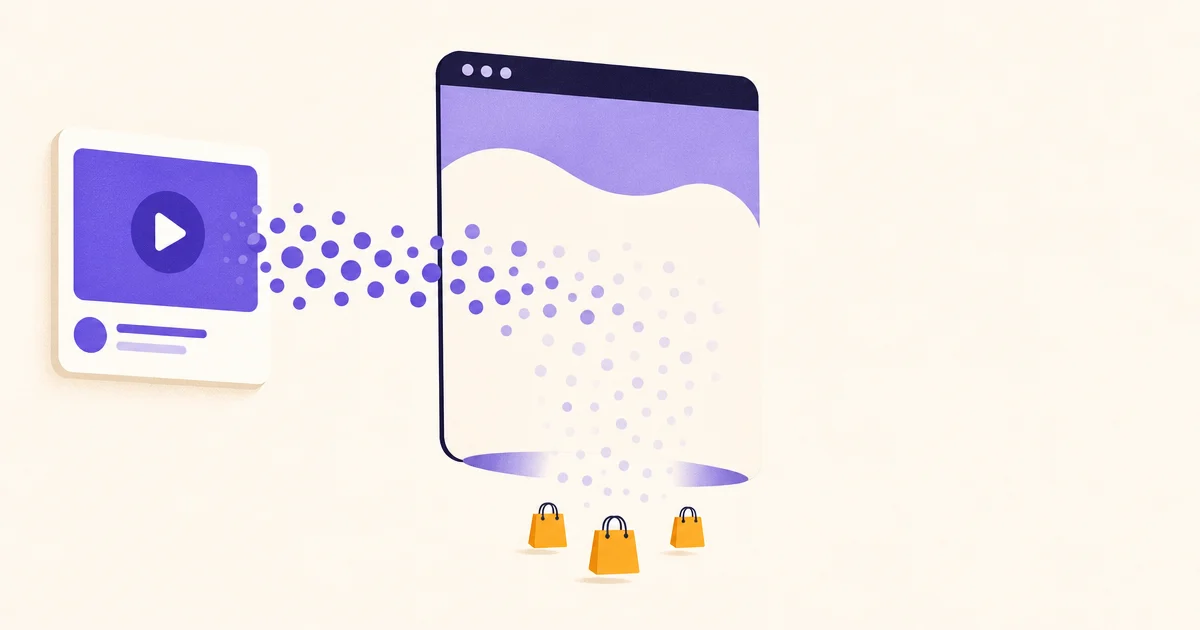
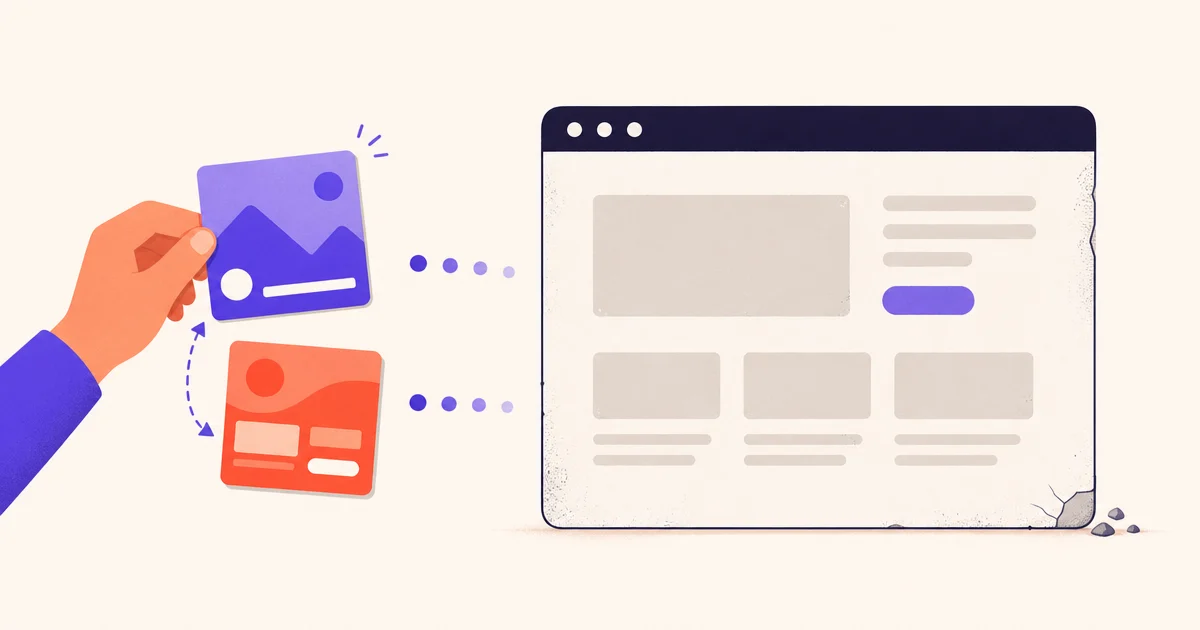
Ad fatigue is almost always fought on the same side: new creatives, new audiences, frequency caps. The forgotten lever sits elsewhere. While your ads change every two weeks, every click you buy has landed on the same page for months. The destination is what's actually wearing out.
Ad fatigue, in numbers
Ad fatigue is the decline in an ad's performance as the same audience sees it again and again: click-through rate erodes, cost per result climbs, conversion follows. The decay is measurable week by week. According to NP Digital (2026, data from 50 advertisers on Google and Meta), a campaign loses 10.8% of its CTR by week five of delivery, and 27.1% by week eight.
The phenomenon is so routine that Meta prints it on the dashboard: Ads Manager flags ads with a creative fatigue status and recommends replacing them. The platform's diagnosis stops at its own border, though. The prescribed fix is always to produce more ads, never to look at what happens after the click.
The 2026 context makes the bill heavier. Across the 40,000 brands tracked by Triple Whale from August 2025 to July 2026, the average Meta CPM reached $15.06, up 13.2% in a year. Every impression costs more, so every week of fatigue burns more budget. And the algorithm itself has changed: what the Andromeda shift did to your returns is measured in our analysis of Meta Andromeda and ROAS.
The market's reflex: produce more creatives
Faced with those curves, the market has five remedies, always the same ones: launch new ads, change the creative angle, target new audiences, broaden existing ones, adjust the offer or the budget. Every reference guide on the subject fits inside that list. Not a line about the page the click lands on.
Let's concede the essential point: it works. A fresh creative revives CTR, the algorithm gives it delivery again, costs relax for a few weeks. Then NP Digital's curve gets back to work and everything starts over. A subscription, not a cure.
That subscription has a price. The average UGC video bills at $198 per deliverable according to the Billo marketplace (2026), which recommends 12 to 20 creatives a month for a modest account and more than 80 past $50,000 in monthly spend. Do the math: thousands of dollars a month, spent to hold the performance you started with. The treadmill speeds up. You're running in place.
What creative rotation can't repair
Ask the question the other way around. How many creatives have you produced in eighteen months? Dozens. How many destination pages? Usually one. A retargeted prospect sees a different ad on every pass, then lands in exactly the same place: same headline, same blocks, same testimonials. The novelty stops at the click.
Triple Whale's numbers describe precisely that displacement of the problem: over one year, average CTR climbed 16% while conversion rate fell 4.7%. Advertisers are winning the battle for attention and losing the one for the sale. A typical landing page converts 6.6% of its visitors at the median (Unbounce, Q4 2024); the other 93 leave, and the next creative will have to buy them back from Meta at a slightly higher price than the last one.
So the fatigue isn't where it's being treated. It lives in the repetition of the experience, and the most repeated experience in your funnel isn't the ad that changes every two weeks. It's the page that hasn't moved in eighteen months.
Refreshing the destination: what that actually means
Refreshing the destination doesn't mean redesigning your page every month; nobody would keep that up. It means replacing one identical page for everyone with an experience that changes with each visitor. The expectation is well documented: 71% of consumers expect personalized interactions and 76% get frustrated without them, according to McKinsey (Next in Personalization, 2021), which also measured 40% more revenue at the companies best at it.
That's exactly how a video funnel works. The click opens a short quiz, and quizzes hold people: 40.1% of those who start one leave their email (Interact, 2026). The answers then assemble a personalized analysis video of 10 to 15 minutes, edited from segments the brand actually filmed and delivered about two hours later. A funnel of five questions with three options each produces hundreds of combinations from about twenty filmed segments: no two prospects ever see quite the same thing.
That's a destination that can't wear out. The static page serves the same pitch to everyone until indifference sets in; the video funnel answers each person, and déjà vu disappears because the content depends on the visitor. For online stores, where cart value and choice complexity weigh heavily, the details are in our piece on the video funnel for ecommerce.
Two objections, taken seriously
"My page already converts." At a 6.6% median, a page that holds its numbers is a good page, for a first-time visitor. But fatigue is a repetition problem: your warmest prospects are exactly the ones who come back, and they're the ones your static page has nothing left to say to. A video funnel gives them a reason to finally act: answer, receive, watch.
"Changing the destination means losing Meta's learning." That objection would hold if this were page rotation. It's the opposite: the URL stays stable, the campaign keeps its history, and it's the content after the click that adapts to each respondent's profile. On the production side, filming the segments takes two to four hours, once, with a recent smartphone. Compare that with a creative cadence billed per deliverable and renewed every month, with no end date.
Accounts that made the switch give a sense of scale. Anna Velazia, a jewelry and lithotherapy brand, moved 70% of its ad budget to its video funnel, now its top acquisition channel, with 3x the ROAS of its other campaigns. BodyTime, a fitness program company, multiplied conversion by 2.5 on the same traffic. Those results belong to those two customers; at minimum, they show which side of the click deserves the effort.
Stop feeding the treadmill
The creative recruits attention; the destination converts it. The market industrialized the first and froze the second. As long as CPMs crept up slowly, the asymmetry went unnoticed. At 13% a year, it's paid in cash: every click you buy back at a higher price deserves better than a page the prospect already knows by heart.
Next time Ads Manager flags creative fatigue, run one test before ordering a new batch. Click your own ad. Look at the page the way a prospect seeing it for the third time does. If nothing changes for them, the fatigue isn't in the creative, and no creative will cure it. Refresh the destination once and for all: a video funnel is the only one that renews itself, visitor after visitor.
Frequently asked questions
What is ad fatigue?
The decline in an ad's performance as the same audience sees it repeatedly: click-through rate erodes and cost per result climbs. According to NP Digital (2026, data from 50 advertisers on Google and Meta), a campaign loses 10.8% of its CTR by week five of delivery and 27.1% by week eight if nothing changes.
How do I know my ads are fatigued?
Three converging signals: frequency rises, CTR falls, cost per result climbs. Meta's Ads Manager also flags affected ads with a creative fatigue status. Watch the CTR and conversion pair above all: if clicks hold up while sales slide, the problem isn't the creative, it's the destination.
How often should I refresh ad creative?
Recommended cadences run from 12 to 20 creatives a month for a small account to more than 80 for large budgets (Billo, 2026), at around $198 per UGC video. That refresh maintains the top of the funnel; it doesn't treat repetition on the destination side, which wears out your most advanced prospects.
Does changing my landing page restart Meta's learning phase?
Editing an active ad can send it back into learning, which is why advertisers hesitate. A video funnel sidesteps the issue: the destination URL never changes, and the content adapts to each visitor based on their quiz answers. The campaign keeps its history while the prospect loses the feeling of déjà vu.