Black Friday retargeting costs what cold prospecting costs, because both clear in the same auction. Triple Whale measured a $22.26 Meta CPM across more than 33,000 stores during BFCM 2025, up 7.6% in a year. The one channel whose price holds steady on November 27 is the contact list you already own.
The auction does not know your audience is warm
The logic looks sound on paper. Bids spike on Black Friday, so you cut prospecting, push budget toward people who already visited, and limit the damage. It is the advice that shows up in most of the guides published in October.
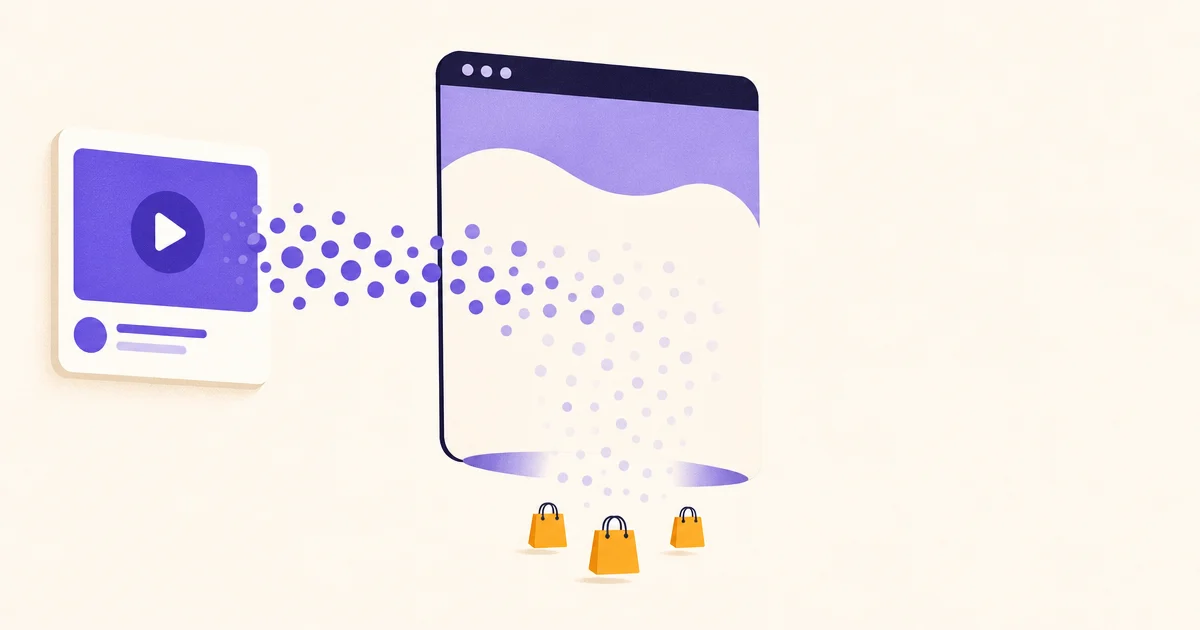
There is a plumbing problem underneath. A retargeting impression clears in the same auction as everything else. Meta does not charge you less because the person on the other end added something to a cart last Tuesday. It charges what other advertisers will pay for that slot, in that second. On November 27, they pay a lot.
Triple Whale tracked the 2025 weekend across more than 33,000 stores, $606 million in ad spend and 26 million orders. Meta CPM came in at $22.26, up 7.6% year over year, against a ROAS that barely moved at 2.26. On Google Ads, cost per acquisition climbed 34% to $26.31 while ROAS dropped 21%.
Those figures cover every campaign, prospecting and retargeting together. That is the point: at the moment of payment, the platform stops telling them apart.
| Metric | BFCM 2025 | Source |
|---|---|---|
| Meta CPM, ecommerce merchants | $22.26, up 7.6% year over year | Triple Whale (2025) |
| Meta ROAS | 2.26, essentially flat | Triple Whale (2025) |
| Google Ads cost per acquisition | $26.31, up 34.18% | Triple Whale (2025) |
| Google Ads ROAS | 3.62, down 21.09% | Triple Whale (2025) |
| Meta CPM, Black Friday week | $13.42, the priciest week of the year | Gupta Media (2025) |
| Gap with the surrounding weeks | 12% to 27% cheaper | Gupta Media (2025) |
Read the last row next to the first. The peak is a week, not a day, and the days on either side run 12% to 27% cheaper in front of a shopper who is already buying, according to Gupta Media and its tracker of tens of billions of impressions. The week you concentrate your retargeting budget is the week that budget buys the least attention per dollar.
Add the discount and the equation closes on itself: gross margin, minus the percentage on the banner, minus an acquisition cost at peak rate. That full calculation runs in Black Friday conversion rate: the 2026 strategy that changes everything. Retargeting sits inside that equation rather than outside it.
A 2.1% capture rate is the real ceiling on your Black Friday
The standard answer to all of this is a popup. Omnisend counted 1.24 billion form displays in 2025, which produced 26.4 million email addresses. That is 2.1%, slightly below the 2.3% recorded the year before.
Put that on a Black Friday. A store with 4,000 visitors on November 27 walks away with roughly eighty contacts. Everyone else saw your prices, compared elsewhere, and left. You paid peak rate for all of them.
The exchange explains the rate. You ask for an identity and you offer a percentage. The shopper knows exactly what that address buys: three emails a week until February. Plenty of them hand over a secondary inbox, and a share of the rest unsubscribes in January.
The second flaw costs more than the first. An address collected behind a promo code arrives with nothing attached. No budget, no use case, no hesitation, no reason the person did not buy. Segmentation becomes impossible, so everyone gets the same message, which is the message your competitors are also sending into an inbox that is already full. The useful question is not what you will send during Black Friday week. It is how many people you are allowed to write to, and what you know about them.
You rent the people you retarget
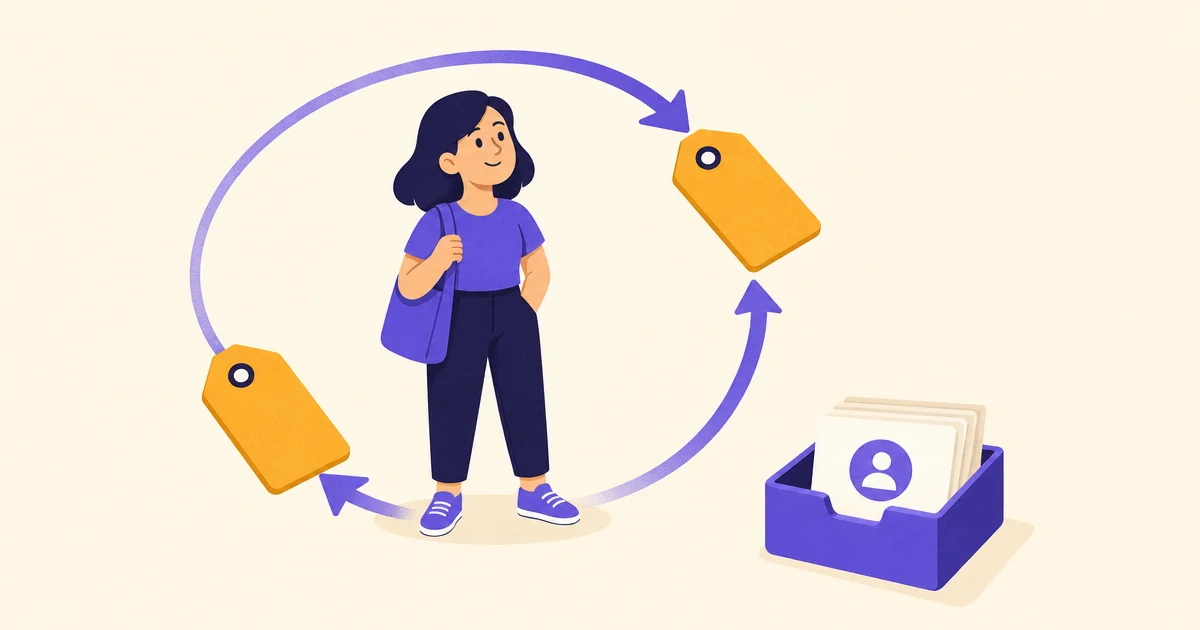
A custom audience looks like an asset. It is not one. You hold neither the identities inside it, nor the rule that decides who sees your ads, nor the price at which they appear. You rent access, month after month, to a list you will never read a single line of.
That list keeps shrinking, and the shrinkage has been measured. Lennart Kraft, Bernd Skiera and Tim Koschella analyzed billions of ad impressions across 19 countries to quantify the effect of Apple's App Tracking Transparency. Their study, published in 2023, found the share of trackable Apple traffic in the United States falling from 73% to 18%, with declines of 24% to 59% in the other markets studied.
So part of your November traffic will never enter a retargeting pool at all. They arrived, they compared, they left, and nothing reusable stayed behind. You still paid Black Friday week prices for every one of them.
Targeting is also getting blurrier, not just smaller. Meta Andromeda and ROAS: what the 2026 numbers actually show documents the slide with numbers: campaigns bring back more clicks, and those clicks buy less.
An email address follows different rules. Sending it costs the same on November 27 as it did in June, and nobody can remove it from your database or decide one morning that it now costs twice as much. Omnisend, working from more than 20 billion emails sent in 2025, found that automated messages account for 2% of sends and 30% of attributed revenue, earning $2.87 per automated email against $0.18 for a scheduled campaign. On SMS, average click rate reaches 12.39% against 0.74% for email. Which brings the whole thing back to one number: how many addresses you hold when the week starts.
A video funnel asks for the email because the video has to land somewhere
There is a different post-click, and it flips the exchange. The visitor starts with a quiz of five to fifteen questions, asked on camera by the seller. Every answer documents their situation: what they want, what they can spend, what is holding them back. They then receive a ten to fifteen minute analysis video, edited for them out of segments a human actually filmed, delivered around two hours after the quiz ends. The mechanics are laid out in What is a video funnel? Definition, mechanics and 2026 data.
The email address and the phone number are the delivery address for that video. The shopper is not paying a toll to unlock a code. They are telling you where to send something they want. That difference is not cosmetic. It separates a demand from a reason to say yes.
What lands in your CRM is a profile, not a row with an address in it: the quiz answers, the budget band, the stated objection, the time spent watching. Your November follow-ups get written per segment instead of going out as one blast, and the person who stalled on sizing stops receiving the message built for the person who stalled on price.
BodyTime, which sells fitness programs, asks fourteen questions about goals and returns a thirteen minute video. The brand reports conversion multiplied by 2.5 at equal traffic. Anna Velazia, in jewelry and crystal healing, made the video funnel its number one acquisition channel, with 70% of ad budget moved onto it and ROAS three times higher than its other campaigns. Those numbers belong to them and are not a market average.
One setting deserves attention before all the others, because it decides what you can do with the list later. Marketing texts require prior express written consent in the United States, and the checkbox that authorizes your follow-ups stays separate from the one that triggers the video. Put it on the final step of the quiz, once the person has answered twelve questions and is waiting for their analysis. That is when they tick it.
On November 27, none of that goes through an auction. You are writing to people who gave you ten minutes of deliberate attention, on a channel priced the same as it was in June, with a message shaped by what they told you. Your competitors, at that exact moment, are buying back the attention of those same people at $22 per thousand impressions.
Yes, you have to film. Budget two to four hours of shooting depending on how granular the analysis gets, another thirty minutes of setup, a recent smartphone and decent light. Half a day, once. That is precisely what the store across the street will not do, and it is why the gap holds.
What has to be filmed before November
A video funnel does not get improvised on November 20, for a dull reason: the footage has to exist. The calendar runs in three moves.
- September: write the questions. Five to fifteen, the ones your best salesperson would ask before recommending anything.
- October: film the segments and wire the integrations. Stripe, Klaviyo, Mailchimp, ActiveCampaign and Shopify are native, everything else runs on webhooks.
- Early November: put the funnel live and send it cold traffic for two weeks, while bids are still bearable.
That last step is not scheduling comfort. The weeks on either side of Black Friday run 12% to 27% cheaper than week 48 on Meta, and Triple Whale counted $1.77 billion in sales during the week before the 2025 weekend, on $396.6 million of ad spend. Demand arrives before the peak. The inflation does not.
One Triple Whale finding says more than the rest. Brands above ten million dollars in revenue make most of their Black Friday from customers already in their database, while brands under one million buy two thirds of theirs from strangers at peak rate. That difference was not decided in November.
The season keeps concentrating. Triple Whale shops alone pulled 19.7% of all Shopify merchant sales over that single weekend, and the promotional window now opens weeks earlier, which widens the expensive stretch instead of narrowing it.
On Friday, November 27, almost everything will still be adjustable: bids, creative, discount depth, inventory, send times. One variable will be locked, and it governs the rest. The number of people you can write to without paying again. That number gets written now, camera in hand.
Frequently asked questions
How much of a Black Friday budget should go to retargeting?
No universal share holds up, because paid retargeting absorbs the same inflation as prospecting. Run the math first: gross margin, minus the discount you advertise, minus an acquisition cost at peak rate. During BFCM 2025, merchant Meta CPM reached $22.26 and Google cost per acquisition hit $26.31, up 34% year over year (Triple Whale, 2025). If the result goes negative, change channels rather than percentages.
Is retargeting dead now that third-party cookies are gone?
No, it is shrinking. The study by Kraft, Skiera and Koschella published in 2023 found trackable Apple traffic in the United States falling from 73% to 18% after App Tracking Transparency, with declines of 24% to 59% in other markets. The durable version of retargeting is the one that runs on contact details you collected yourself, with the person's consent.
How long does it take to build a list before Black Friday?
Give yourself eight to ten weeks of traffic to reach November 27 with a list worth sending to, which puts the start in early September. The cheapest window sits before the peak: weeks around Black Friday cost 12% to 27% less on Meta (Gupta Media, 2025), and buying has already started, with $1.77 billion recorded in the week before the 2025 weekend (Triple Whale, 2025).
Should I collect phone numbers or just email addresses?
Collect both when the mechanic earns you the right. SMS averages a 12.39% click rate against 0.74% for email, across the 246 million sends Omnisend analyzed in 2025. It also requires explicit prior consent on its own checkbox, separate from the rest of the form. A video funnel gets both without friction, since the analysis video has to be delivered somewhere.